

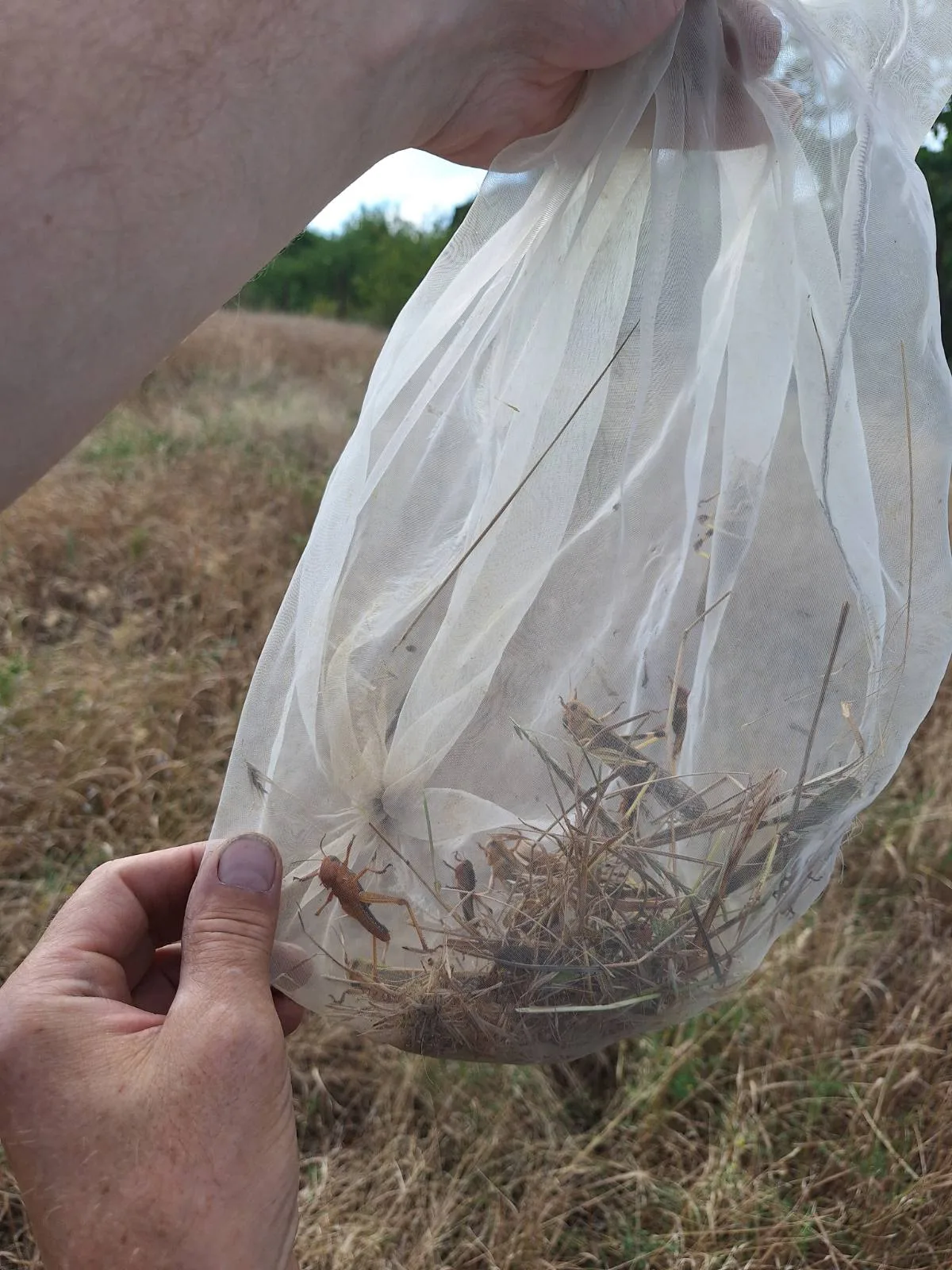
Згідно наказу директора ІЗР НААН України 23-25.07.2025 р. направлено у відрядження Федоренка А.В. (провідного наукового співробітника лабораторії прогнозу і карантину рослин) і Шиб Віктора Романовича (здобувача) для обстежень спалаху сарани на Півдні України. На землях Кушугумської територіальної громади, Запорізького району, Запорізької області, на площі близько 200 га, було виявлено осередки сарани за чисельності від 40,0 до 100,0 екз./м2 (личинки та імаго), які концентрувалися в річкових плавнях вздовж Дніпра, та на площах, що колись були затоплені Каховською ГЕС. Також відмічено масову міграцію зграй і куліг шкідника по території громади, а також в Комунарському та Олександрівському районах м. Запоріжжя.
Співробітниками ІЗР НААН проведено обліки чисельності на зазначених локаціях (очеретяні масиви і перелоги), та визначено видовий склад наявних саранових. Виявлені імаго та личинки, за чисельності 7,0-10,0 екз./м2 (враховуючи попередні обробки інсектицидом), належали до виду сарана азіатська або перелітна (Locusta migratoria L.).
Зграї мігрують в напрямку узбережжя річки Конка, де великі масиви очерету. З навколишніх сіл (Юрієвка і Новоселівка (Запорізька обл.)), що розташовані біля лінії розмежування з військами рф. надходять скарги на появу шкідника, але у зв’язку з бойовими діями моніторинг спеціалістами там не проводився. Здебільшого сарана продовжує триматися очеретяних масивів, і подекуди заселяє та шкодить на с.-г. угіддях.
Оскільки науковими співробітниками ІЗР НААН впродовж багатьох років на регулярній основі системно проводиться моніторинг основних шкідників с.-г. культур в Україні, і зокрема саранових, слід зазначити, що аналогічна ситуація вже траплялася. Так, спалах чисельності цього фітофага було зафіксовано 12 липня 2019 року у Станично-Луганському районі, Луганської області. На територіях, де відмічені зграї шкідника було проведено обліки та ідентифіковано вид, як сарану перелітну або азіатську (Locusta migratoria L.), за чисельності, що сягала більше 50,0 екз./м² (ЕПШ для стадних саранових коливається в межах – 2,0-5,0 екз./м²). Надалі спостереження показали, що заліт зграї цієї сарани відбувся з територій поза лінією розмежування з ЛНР (з резервацій її розмноження на закинутих землях рибгоспу на території Валуйської селищної ради Станично-Луганського району). Ці землі виявилися масштабною за площею конгломерацією пересохлих ставків, осушених чеків, де інде порослих очеретом пустирів, що простягалися вздовж річки Донець. Оскільки осередки розмноження й розповсюдження сарани виявилися безпосередньо на лінії розмежування з ЛНР, то в цій зоні було неможливо проводити антисаранові заходи з використання сільськогосподарської авіації.
Ці комахи впродовж усієї історії людства становлять серйозну небезпеку для сільськогосподарських культур, адже їх популяціям властиві періодичні спалахи чисельності. На території України мешкає 22 види саранових, які належать до підродин Acridinae, Oedipodinae, Catantopinae, Acridiinae. Встановлено, що структура видового складу в угрупованні саранових (частка окремих видів в популяціях саранових) мінлива і залежить від багатьох факторів, зокрема від особливостей біотопу чи гідротермічних умов. Періодичні масові спалахи чисельності, які супроводжуються значними збитками в сільському господарстві, властиві лише видам саранових, що здатні перебувати у двох морфо-фізіологічних формах – поодинокій та стадній, а трансформацію популяції із поодинокої у стадну спричиняють, зазвичай, екологічні чинники. Так, у цих комах водночас відбуваються помітні зміни у морфології, фізіології та етології. Сукупність особин одного виду починає поводити себе як єдиний організм, якому притаманні надзвичайна ненажерливість та міграційна активність, вони спроможні утворювати куліги личинок (тимчасові скупчення) або зграї імаго.
Екологічні особливості розвитку в зоні потенційної шкідливості
Масові розмноження й поширення азіатської сарани найчастіше пов’язані з сукупністю різних чинників. Так, відомо, що її розвиток знаходиться у прямій залежності від гідротермічного режиму у місцях мешкання. Загалом, найбільшу чисельність саранових в Україні спостерігають в областях, де сума активних температур (> 50°С) перевищує 3000°С (Херсонській, Запорізькій, Донецькій, Луганській та в Криму), а також в регіонах де температура поверхні землі влітку нагрівається до +28-33°С.
Отже, рання й тепла весна з низькими короткочасними паводками, спекотне літо і довготривала тепла осінь є головним фактором, що може призвести до спалахів масового розмноження. Так, в теплі, сухі роки, коли середня температура повітря впродовж вегетаційного періоду понад 13,8 °С, а кількість опадів не перевищує 320 мм – розвиток сарани прискорюється і вона встигає відкласти яйця до похолодання. Після 2-ох років (з такими сприятливими для шкідника умовами) на 3-тьому році виникає висока ймовірність спалаху чисельності, особливо у районах де є стації, що необхідні для розвитку фітофага.
Варто зазначити, що азіатська сарана – комаха, яка характерна для болотяних луків і заростей очерету, та поширена в плавнях Дунаю, Дніпра, Дністра і Прута. Саме тому, другим вирішальним фактором для спалаху чисельності є наявність великих очеретяних масивів, що починають пересихати (з появою ділянок зі зрідженим рослинним покривом, чи взагалі відкритих), та ідеально придатні для відкладання яєць.
Отже, за вищезазначених фактів існує велика вірогідність спалаху чисельності стадних саранових у наступному році.
Природа різкого зростання чисельності саранових, завжди пов’язана з багатофакторністю чинників. Основною визначальною передумовою цього є наявність в регіоні пересохлих очеретяних масивів. Також виникнення на них ділянок зі зрідженим рослинним покривом, чи взагалі відкритих, добре прогрітих, що ідеально підходять для відкладання яєць й формування ворочок (кубушок). Так, після руйнування рашиськими військами Каховської ГЕС, від води звільнилися великі площі, що довгий час були дном водосховища. Ці вологі й теплі ґрунти, з рясною очеретяною рослинністю, вже просто по факту – ідеальний резерват для розвитку сарани. До того ж, слід враховувати наявність довкола великої кількості й інших необроблених площ та занедбаних полів (у зв’язку з війною). І все це – на фоні спекотного літа, з року в рік, у зв’язку з глобальним потеплінням.
Отже, хоча зв’язок масових розмножень саранових з кліматичними змінами встановлено вже досить давно, проте, використовувати ці знання практично (для передбачення і запобігання), робить неможливим відсутність точних довгострокових метеорологічних прогнозів, та повна не прогнозованість антропічного чинника (війни), що раптово й несподівано вносить свої корективи.
Рекомендації щодо ліквідації осередків сарани
Основною причиною спалаху чисельності цього шкідника у 2025 році є неможливість вчасно проводити регулярний моніторинг і обробку інсектицидами основного вогнища фітофага, адже воно знаходилося на територіях, що частково заміновані, і ведуться бойові дії. Також тут неможливо використання сільськогосподарської авіації.
Щодо рекомендацій захисту, в даному випадку:
- проведення регулярного фіто-санітарного моніторингу та подальших інсектицидних обробок (за потреби) препаратами вказаними у «Переліку пестицидів і агрохімікатів, дозволених до використання в Україні» в місцях масової появи сарани, на площах підконтрольних Україні;
- суцільні обробки слід проводити лише в місцях з високою чисельністю шкідника, перш за все в агроценозах, та на прилеглих до них територіях;
- під час застосування інсектицидів проти куліги, що рухається, обробляють не лише площу, що фактично зайнята шкідником, але й попереду маршруту пересування (на відстань 200-300 м.);
- в разі заселення великих ділянок, за браком часу, чи зазначених для суцільної обробки препаратів, використовують смугове застосування інсектицидів. При цьому ширина оброблюваних смуг та проміжків між ними не має перевищувати 40-50 м., а їх кінці з’єднують загальною обробленою смугою, утворюючи таким чином замкнуту мережу
| Підготовлено лабораторією прогнозів та карантину рослин ІЗР НААН за матеріалами регіональних установ НААН і Держпродспоживслужби
Галаган Т.О. Федоренко А.В. Бахмут О.О. Вовкотруб О.М.
|