

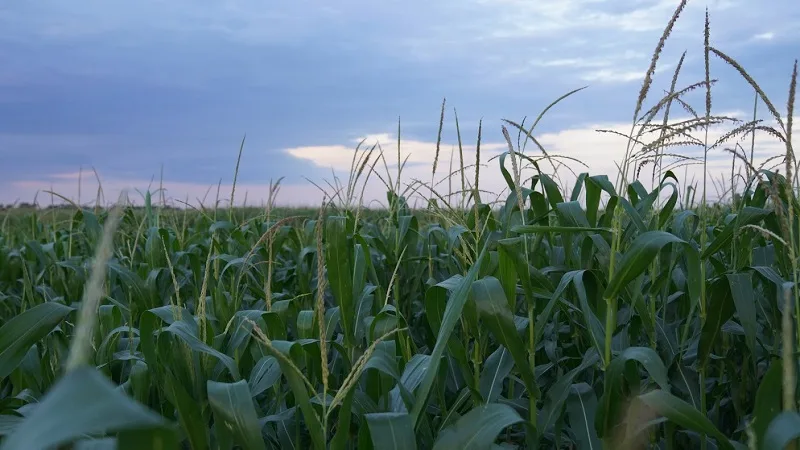
В незібраних посівах кукурудзи шкодять стебловий (кукурудзяний) метелик – заселено 60-62% площ за чисельності 1,0 екз./рослину, пошкоджено 2-8% рослин (Закарпатська, Кіровоградська обл.), мишоподібні гризуни – 14% площ, 0,1 колоній/га (Львівська обл.).
Фузаріозом уражено 18-30% площ кукурудзи, максимально – 62% площ (Кіровоградська обл.), 2-6% рослин за розвитку хвороби 1-2% (Закарпатська, Волинська обл.), пухирчатою сажкою – 7-29% площ, 1-3% рослин за розвитку хвороби 0,3-1% (Волинська, Львівська обл.), осередково – 100% (Волинська обл.), пліснявінням качанів – 71% площ, 1-3% рослин за розвитку хвороби 0,3% (Львівська обл.), оливковою пліснявою – 38% площ, 2-3% рослин (Тернопільська обл.), іржею – 29% площ, 2-4% рослин за розвитку хвороби 0,5% (Львівська обл.).
Незібрані посіви соняшника уражено білою гниллю – 17% площ, 5-7% рослин за розвитку хвороби 3-4% (Кіровоградська обл.), сірою гниллю – 40% площ, 8-10% рослин за розвитку хвороби 6-8% (Кіровоградська обл.).
Багатоїдні шкідники
Лучний метелик: на багаторічних травах, неорних землях, на 6-8 % площ гусеницями за чисельності або 0,5-1,0 екз./м2 пошкоджено до 3 % рослин в слабкому ступені (Одеська обл.).
Стебловий (кукурудзяний) метелик: у посівах кукурудзи, на невгіддях на 60-62% площ гусеницями в кількості 1 екз./рослину пошкоджено 2-8% рослин та 1,5-7% качанів переважно у слабкому ступені (Закарпатська, Кіровоградська, , Хмельницька обл.).
Білани (ріпаковий, капустяний): на ріпаку озимому, капусті пізніх сортів, неорних землях та невгіддях на 4-30% площ, максимально – на 100% площ (Полтавська, Херсонська обл.),спостерігається слабкий літ метеликів у кількості 1-2 екз. в полі зору за 10 хв. (Полтавська обл.) або 1-2 екз. на 10 кроків, а їх гусеницями в кількості 0,3-2 екз./м2 або 1-9 екз./рослину пошкоджено 0,3-5% рослин переважно в слабкому ступені (Житомирська, Київська, Одеська, Полтавська, Тернопільська, Херсонська, Черкаська, Чернівецька обл.).
Підгризаючі совки (озима, оклична): в посівах ріпаку озимого, пшениці озимої, на, багаторічних травах, стерні злакових та олійних культур на 4-62% площ, максимально – на 100 % площ (Полтавська обл.) гусеницями за чисельності 0,2-2,0 екз./м2 пошкоджено 0,7-4% рослин в слабкому ступені (Дніпропетровська, Житомирська, Івано-Франківська, Київська, Кіровоградська, Львівська, Одеська, Полтавська, Хмельницька, Черкаська обл.).
Листогризучі совки (бавовникова, капустяна): в посівах ріпаку озимого, на капусті та багаторічних травах гусеницями заселено 6-74% площ, максимально –100% площ (Львівська, Полтавська обл.), за чисельності 1,0-2,0 екз./рослину, або 0,5-10 екз./м2 пошкоджено 1-6% рослин в слабкому ступені (Дніпропетровська, Львівська, Одеська, Полтавська, Чернівецька обл.).
Дротяниками і несправжніми дротяниками в посівах ріпаку озимого, пшениці озимої, кукурудзи, на полях після ярої пшениці, на картоплі, моркві заселено 32-50% площ, максимально – 100 % площ (Львівська обл.) за чисельності 0,3-2,0 екз./м2 (Київська, Львівська, Хмельницька, Чернівецька обл.).
Личинками хрущів у посівах ріпаку озимого, пшениці озимої, кукурудзи, на полях після ярої пшениці, на картоплі, моркві заселено 33-43% площ, максимально – 100 % площ (Львівська обл.) за чисельності 0,5-2,0 екз./м2 (Київська, Львівська, Хмельницька обл.).
Саранові (прус італійський): на незораних після пшениці озимої та ріпаку полях осередково зустрічаються окрилені особини за чисельності 1 екз./м2 (Запорізька обл.).
Мишоподібні гризуни: в посівах ріпаку озимого, пшениці озимої, ячменю озимого, незібраних посівах кукурудзи, на стерні та падалиці зернових і олійних культур, багаторічних травах, неорних землях, узбіччях доріг, у садах та лісосмугах, на овочевих культурах приватного сектору на 1-72% площ, максимально – на 100% площ (Волинська, Дніпропетровська, Київська, Кіровоградська, Львівська, Полтавська, Рівненська, Харківська, Хмельницька обл.) чисельність становить від поодиноких нір до 5 колоній/га за 1-6 жилих нір/колонію, максимально – до 7-15 (Київська, Кіровоградська обл.) жилих нір/колонію (Волинська, Дніпропетровська, Житомирська, Закарпатська, Київська, Кіровоградська, Львівська, Одеська, Полтавська, Рівненська, Харківська, Херсонська, Хмельницька, Черкаська, Чернівецька, Чернігівська обл.).
Підготовлено лабораторією прогнозів та карантину рослин ІЗР НААН за матеріалами регіональних установ НААН і Держпродспоживслужби 16 жовтня 2025 р.
Галаган Т.О.
Федоренко А.В.
Бахмут О.О.
Вовкотруб О.М.